
A multilateral transaction refers to a trading mechanism involving multiple sellers and buyers, where each party has the freedom to offer their selling and buying prices. A match occurs when there is a convergence between a selling price and a buying price. Multilateral transactions within an exchange are conducted with transparency and accountability, providing equal opportunities for all market participants. This structure facilitates the creation of a credible marketplace that serves as a platform for price discovery and risk mitigation or hedging activities.
The transparent nature of these transactions ensures fair market practices, while the accountability measures safeguard the interests of all parties involved. By allowing multiple participants to engage simultaneously, the exchange fosters a dynamic environment where market forces can freely interact, leading to efficient price formation and risk management opportunities.
In addition, exchanges often offer derivative products that contribute to market deepening. These derivatives provide market participants with sophisticated tools for risk management and speculation. By introducing these financial instruments, exchanges can attract a wider range of market participants, including institutional investors and speculators. This increased participation leads to greater liquidity, tighter bid-ask spreads, and more accurate price discovery, ultimately resulting in a deeper and more efficient market.
To facilitate these complex transactions and ensure seamless operations, modern exchanges employ state-of-the-art technologies. These may include high-speed matching engines, real-time risk management systems, and advanced data analytics platforms. Such technologies enable rapid order execution, enhance market surveillance capabilities, and provide participants with valuable insights into market trends and patterns. The combination of multilateral trading mechanisms, derivative products for market deepening, and state-of-the-art technologies creates a robust and efficient marketplace. This ecosystem not only serves the needs of various market participants but also contributes to the overall development and sophistication of financial markets.
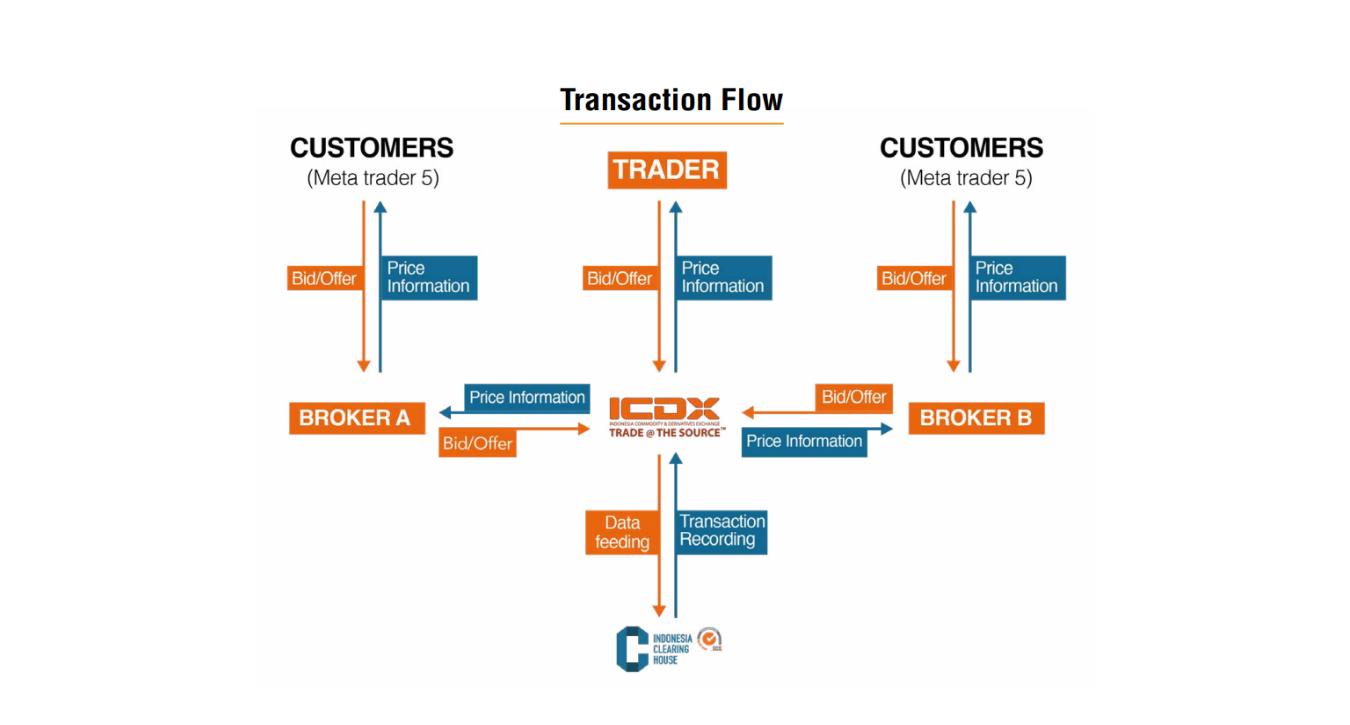
GOFX is a suite of futures products encompassing Gold, Oil, and Forex, traded on the Indonesia Commodity and Derivatives Exchange (ICDX). These transactions occur in a multilateral market supervised by the Indonesian government’s Commodity Futures Trading Regulatory Agency (CoFTRA), ensuring a fair and secure trading environment. GOFX is integrated with MetaTrader 5 (MT5), a globally recognized trading platform, offering users advanced analytical tools and a user-friendly interface. This integration enhances GOFX’s accessibility to global markets and provides traders with a comprehensive, efficient trading experience in commodities and forex markets.
GOLD
Gold is a widely recognized alternative investment, valued for its ability to serve as a store of wealth and a hedge against unexpected inflation. To cater to diverse investor needs, ICDX offers Spot Gold contracts in three sizes: 1 gram, 1 ounce, and 10 ounces. These rolling contracts are based on Loco London gold quality standards. The contracts are rolled over daily, providing investors with flexibility and convenience. Unlike purchasing physical gold at full price, ICDX Spot Gold contracts offer cash settlement, making them a more practical option for many investors. This approach allows for easier entry and exit from gold investments without the complexities associated with handling physical gold. Gold is a widely recognized alternative investment, valued for its ability to serve as a store of wealth and a hedge against unexpected inflation. To cater to diverse investor needs, ICDX offers Spot Gold contracts in three sizes: 1 gram, 1 ounce, and 10 ounces. These rolling contracts are based on Loco London gold quality standards.
CRUDE OIL
Oil, as a major energy source, plays a crucial role in the global economy. Fluctuations in oil prices significantly impact businesses and influence the prices of other commodities. These price movements also present investment opportunities through futures contracts. Indonesia, being one of the world’s top crude oil exporters, has prompted the ICDX to offer crude oil futures contracts as part of its GOFX multilateral product suite. This offering allows investors to participate in the oil market and potentially benefit from price fluctuations while contributing to market liquidity.
FOREX
The foreign exchange (forex) market is a global platform for currency trading. According to the most recent Bank for International Settlements (BIS) Triennial Survey, daily forex transactions exceed US$5 trillion globally. This popular alternative investment allows traders to profit from economic fluctuations, whether currencies rise or fall. Recognizing the significance of this market, the ICDX has introduced Southeast Asia’s first exchange-traded spot forex contracts. This offering provides investors with a regulated and transparent environment to participate in currency trading, enhancing the region’s financial market infrastructure.
CPOTR & OLEINTR
Indonesia is renowned as the world’s largest producer of Crude Palm Oil (CPO), positioning it as a key player in the global palm oil industry. In supporting Indonesia’s commodity trading ecosystem, the Indonesia Commodity & Derivatives Exchange (ICDX) plays a crucial role as a market organizer, facilitating futures contract trading for CPO. As part of its commitment to creating a more transparent and efficient trading ecosystem with established quality standards, ICDX has launched two primary futures contracts: CPOTR and OLEINTR. ICDX first introduced the CPOTR futures contract in 2010 as a hedging instrument specifically designed for the CPO industry. This contract enables industry participants, including producers, exporters, and buyers, to manage price risks more optimally and efficiently while enhancing transparency in CPO price formation. Since 2013, the settlement price of the CPOTR contract has been incorporated into the formula for determining the Export Benchmark Price (HPE), further strengthening its role in the national CPO trading ecosystem.
In addition to CPOTR, ICDX launched the OLEINTR futures contract in 2011 as a hedging instrument and a transparent, efficient trading solution for cooking oil with quality standards established by the Exchange. This contract aims to support price stability in the domestic market, improve supply chain efficiency, and provide a hedging mechanism for industry players, including producers, distributors, and consumers of cooking oil in Indonesia. With these two futures contracts, ICDX continues its commitment to developing a more structured, competitive, and reliable commodity futures market. This effort supports the growth of the palm oil industry and strengthens Indonesia’s position as a global CPO trading hub.